 Call
Call Patient Reports
- Cardiology 84
- Dermatology 45
- Endocrinology 33
- ENT 16
- Fertility 190
- Gastroenterology 78
- General-Medicine 81
- Gynecology 80
- Hematology 19
- Infectious-Diseases 33
- Neurology 52
- Oncology 34
- Ophthalmology 23
- Orthopedics 69
- Pediatrics 31
- Procedure 23
- Public-Health 144
- Pulmonology 59
- Radiology 8
- Urology 68
- Wellness 161
- Woman-and-child 77
- 3420
- 3.2 Minute
Keyhole Cardiac Surgery: Techniques and Potential Risks
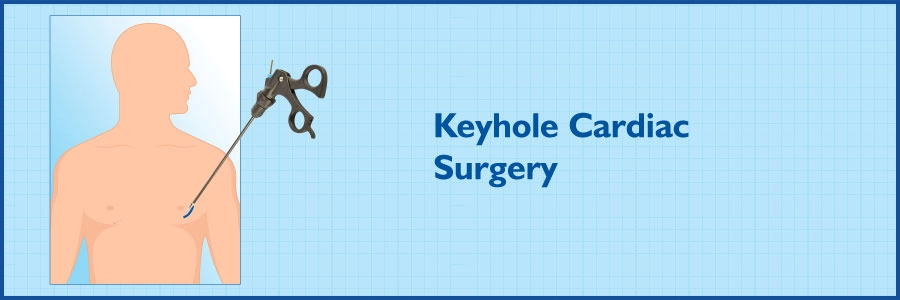
Keyhole Cardiac Surgery, or minimally invasive heart surgery, involves making small incisions in the chest to reach the heart between the ribs. This procedure can treat a variety of heart conditions.
Compared to open-heart surgery, this type of surgery may result in less pain and a faster recovery for many people. Cardiac bypass surgeries or keyhole bypass surgery, heart valve replacement or repair surgeries, congenital heart defect repair, and cardiac tumor excisions can all be performed through a keyhole incision.
Techniques
- Traditional cardiac surgeries involve cutting the chest bone (sternum) in the midline & reaching the heart, but in MICS, “no bone is cut” We enter from the space between the Ribs & reach the heart.
- Depending upon the procedure to be done, we enter the chest either through the right thorax (chest) or left thorax (chest).
- In any case, an incision is approximately 3 inches in length, whereas in regular cardiac surgery where the bone is cut, it has approx 12 inches long incision (cut).
Risks and Limitations of Keyhole Heart Surgery
As with every surgery, there are some disadvantages. Here are they:
Expensive
Keyhole (MICS) surgery requires different equipment and a different set-up in the operating room. It also requires trained surgeons and staff. Moreover, this technique provides a wide range of benefits to the patient, so MICS or keyhole surgery is more expensive than traditional cardiac surgery.
Complexity
Over the years since it was introduced into surgical practice, it has been seen that the duration of on-pump (heart-lung machine) or complete surgery is longer in Keyhole Surgery as it is more complex.
Get a second opinion from trusted experts and makeconfident, informed decisions.
Get Second OpinionNot sure where to start?
Talk to a patient care advisor — free, confidential, 24/7. We'll match you to the right specialist and book your appointment in minutes.
What is the success rate of keyhole heart surgery?
Keyhole heart surgery has high success rates, and most patients do well. The exact success rate, however, can differ based on the specific surgery, the patient’s overall health, and the presence of any comorbid conditions. For accurate data, you must get in touch with a cardiologist.
Suitable Candidate for Keyhole Cardiac Surgery
The following are crucial points that need to be taken care of while choosing this surgery
Selection Of Patient
Not all patients are suitable for keyhole surgeries, as this technique involves single-lung ventilation. Therefore, any patient with Asthma or lung conditions is not ideal for MICS.
Diffuse Coronary lesion
- In early years of experience, diffuse coronary lesions, or severely calcified mitral valves, were not done by MICS.
- But now, by experience, we are doing such cases with a keyhole approach.
- In the early years, only single vessel coronary bypass was done by MICS, but now we are doing triple bypass by cardiac keyhole surgery.
Anatomy of structures
For aortic valve surgery, the anatomy of the aorta in the chest is essential. The straight rising aorta behind the sternum (chest bone) is difficult to operate by keyhole approach, or if the aorta is narrow ( < 2.5cm diameter), it is difficult through the keyhole approach.
Safety With Mics (Keyhole Cardiac Surgery)
Over all these years, keyhole cardiac surgery has produced comparable results with traditional cardiac surgery. Patient outcomes have been better, and recovery has been remarkable.
Your health is everything - prioritize your well-being today.
Schedule Your AppointmentConclusion
- Conventional Heart Surgery has undergone extensive changes over the past decade.
- Our team is well equipped to undertake many isolated or combined cardiac valve surgeries & single or multiple coronary bypass surgeries or keyhole bypass surgery using a keyhole approach without cutting any bone.
- By reviewing the complete patient and their disease profile, we formulate and provide the best possible surgical option, keeping in mind the best possible outcome.
- Call us now to learn more about and understand this procedure. Medicover Hospitals has the best Cardiologists and Cardiac surgeons, with years of experience managing cardiac problems.
- We are fully equipped with high-end technology and state-of-the-art facilities for accurate diagnosis and treatment.
Frequently Asked Questions
MICS uses smaller incisions, typically about 2-4 inches long, compared to the larger incisions required for traditional open-heart surgery. This can result in less pain and faster healing.
MICS can treat various heart conditions, including valve repair or replacement, coronary artery bypass grafting (CABG), and other procedures that require surgical intervention on the heart.
Benefits of MICS include smaller scars, reduced risk of infection, shorter hospital stays, quicker recovery time, and potentially less pain compared to traditional open-heart surgery.
Eligibility for MICS depends on the specific heart condition and the patient's overall health. A cardiologist or cardiac surgeon will determine if MICS is suitable based on individual circumstances.
Recovery after MICS may involve a few days in the hospital followed by a period of rest at home. Patients are advised to increase activity levels as recommended by their healthcare team gradually.
- Cardiology
- Case Studies
- Dermatology
- Endocrinology
- ENT
- Fertility
- Gastroenterology
- General
- General-Medicine
- Gynecology
- Hematology
- Infectious-Diseases
- Medical News
- Neurology
- Oncology
- Ophthalmology
- Orthopedics
- Pediatrics
- Procedure
- Public-Health
- Pulmonology
- Radiology
- Second Opinion
- Urology
- Wellness
- Woman-and-child
Related Blogs
Still have questions? Speak with our experts now!
040-68334455


