 Call
Call Patient Reports
Find Doctors
Table of Contents
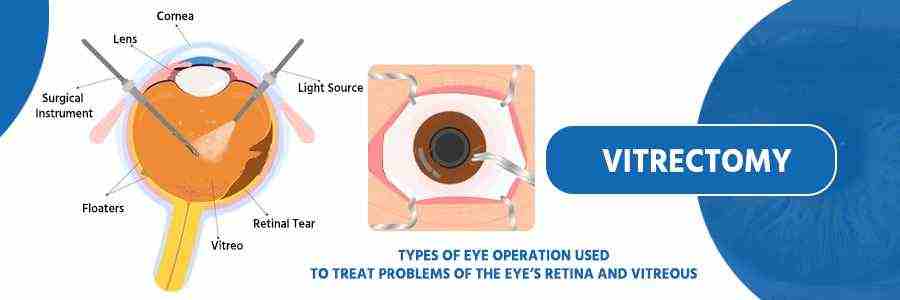
A vitrectomy is a surgical procedure used to treat eye problems in the retina and vitreous. It is done to remove the vitreous humor fluid or only vitreous and replace it with another solution inside the eyeball. The vitreous is the gel-like fluid present in the eyes.
Retinal holes, detached retina, diabetic retinopathy, vitreous haemorrhage, macular holes, preretinal membrane fibrosis and other eye conditions are treated with vitrectomy.
What is Vitrectomy?
Vitrectomy is a microsurgical procedure where the vitreous gel is removed from the eye and replaced with a saline solution, gas bubble or silicone oil to restore proper vision and access to the retina. It is performed using tiny instruments and a microscope through very small incisions in the eye.
Vitrectomy is commonly used for:
- Retinal detachment repair
- Vitreous hemorrhage that is bleeding inside the eye.
- Macular holes or puckers.
- Diabetic retinopathy complications.
- Severe eye trauma or infections.
Key Takeaways | Overview
| Details | Description |
|---|---|
| Name of Surgery | Vitrectomy (Pars Plana Vitrectomy - PPV) |
| Procedure Type | Ophthalmic Microsurgery / Retinal Surgery |
| Anesthesia | Local or General Anesthesia (as per condition) |
| Procedure Duration | 1 to 2 hours |
| Recovery Time | 1 to 2 weeks for light activities; full visual recovery may take several weeks |
Get a second opinion from trusted experts and makeconfident, informed decisions.
 Get Second Opinion
Benefits of Vitrectomy
- Restores or improves vision by clearing visual obstructions.
- Repairs retinal conditions that may lead to blindness if untreated.
- Minimally invasive with very small incisions.
- Allows for additional retinal procedures during the same surgery.
- Personalized approach based on specific eye conditions.
- Highly effective for both emergency and planned retinal interventions.
What is the Vitrectomy Cost in India?
The cost of vitrectomy in India can vary between Rs. 35,000 and Rs. 1,25,000, depending on the complexity of the case, the use of gas or silicone oil, the type of anesthesia, and the hospital location. Advanced retinal surgeries remain more affordable in India than in other countries.
Basic Cost Components
- Retina Specialist Consultation
- Pre-surgery Diagnostics like OCT, Fundus Fluorescein Angiography, Ultrasound B-scan
- Vitrectomy Surgery Charges
- Operating Microscope and Surgical Equipment
- Intraocular Tamponade, such as Gas or Silicone Oil
- Anesthesia and Operation Theatre Charges
- Medicines and Follow-ups
Vitrectomy Procedure Cost in Different Cities
| City | Average Cost (INR) |
|---|---|
| Cost of Vitrectomy Surgery in Hyderabad | Rs. 25,000 - Rs. 1,60,000 |
| Price of Vitrectomy Surgery in Chandanagar | Rs. 24,200 - Rs. 1,55,200 |
| Vitrectomy Surgery Cost in Karimnagar | Rs. 21,700 - Rs. 1,39,200 |
| Vitrectomy Surgery Price in Nizamabad | Rs. 21,700 - Rs. 1,39,200 |
| Cost for Vitrectomy Surgery in Warangal | Rs. 21,700 - Rs. 1,39,200 |
| Price for Vitrectomy Procedure in Secunderabad | Rs. 25,000 - Rs. 1,60,000 |
| Vitrectomy Surgery Cost in Financial District | Rs. 26,200 - Rs. 1,68,000 |
| Vitrectomy Surgery Cost in Visakhapatnam | Rs. 22,500 - Rs. 1,44,000 |
| Vitrectomy Surgery Cost in Vizianagaram | Rs. 21,500 - Rs. 1,37,600 |
| Vitrectomy Surgery Price in Srikakulam | Rs. 21,500 - Rs. 1,37,600 |
| Vitrectomy Surgery Cost in Kakinada | Rs. 21,700 - Rs. 1,39,200 |
| Cost for Vitrectomy Procedure in Kurnool | Rs. 21,500 - Rs. 1,37,600 |
| Vitrectomy Surgery Cost in Nellore | Rs. 21,700 - Rs. 1,39,200 |
| Vitrectomy Surgery Price in Mumbai | Rs. 30,000 - Rs. 1,92,000 |
| Vitrectomy Surgery Cost in Nashik | Rs. 26,200 - Rs. 1,68,000 |
| Price of Vitrectomy Procedure in Chhatrapati Sambhaji Nagar | Rs. 25,000 - Rs. 1,60,000 |
| Vitrectomy Surgery Cost in Pune | Rs. 26,200 - Rs. 1,68,000 |
| Vitrectomy Surgery Cost in Sangamner | Rs. 23,000 - Rs. 1,47,200 |
| Vitrectomy Surgery Price in Bengaluru | Rs. 27,500 - Rs. 1,76,000 |
Disclaimer: These are estimated costs. The final price depends on the patient's condition, the type of tamponade used, and post-operative care requirements. Contact us for a personalized cost estimate.
Your health is everything - prioritize your well-being today.
Schedule Appointment
What are the Factors Affecting Vitrectomy Cost?
There are many factors that can influence the total cost of vitrectomy surgery like:
- Severity of the Eye Condition: More complex cases require longer surgery and intensive follow-up.
- Tamponade Type: Use of silicone oil increases cost compared to gas-based tamponade.
- Retina Surgeon's Expertise: Senior retina specialists may charge higher fees.
- Hospital Infrastructure: Tertiary care centers with advanced retinal units may charge more.
- Pre-operative and Post-operative Imaging: OCT scans and follow-ups can add to the total cost.
- City and Location: Charges vary between metro and non-metro cities.
- Insurance Coverage: Many insurance plans cover retinal surgeries, especially for medically necessary cases.
How To Prepare For Vitrectomy Surgery?
- Before the surgery, you will undergo a few medical tests to determine whether you are fit for the procedure.
- If you have any allergies or are on any medications, inform your ophthalmologist or eye surgeon.
- You may need to fast for six to eight hours before the operation.
How Is Vitrectomy Surgery Done?
- Once you are inside the operating theatre, the anesthetist will give you a mild anesthetic to numb the eye.
- To begin with the vitrectomy surgery, the eye surgeon will ensure that your eyelids are fully opened.
- The surgeon makes an incision into the first layer of your eye tissue, then a second incision into the white tissue of the eye called the sclera.
- A fiber-optic light is used to observe the inside of your eye.
- The doctor removes the vitreous and other unnecessary tissues through one of the incisions.
- Replaces the vitreous with other material, like gas, air or a saline solution. A fluid naturally produced by your eye will gradually replace this material.
- The surgeon performs surgical repair of your retina and removes damaged tissue from the eyeball. With the help of a laser, the surgeon fixes any retinal-related issues.
- Finally, the doctor removes any instruments and lights and closes the opening in the eye. Usually, stitches will not be required.
- An antibiotic solution will be placed in your eye to prevent eye infection. The eye will be covered with a patch.
Why Medicover Hospital for Vitrectomy?
- Expert Retina Surgeons: Highly experienced in advanced microsurgical retinal procedures.
- Latest Equipment: Equipped with modern vitreoretinal surgical systems and imaging tools.
- Minimally Invasive Techniques: For reduced pain, smaller incisions and faster recovery.
- Complete Eye Care: Integrated ophthalmic services for diagnosis, surgery and rehabilitation.
- Affordable and Transparent Pricing: No hidden costs with complete billing support.
- Post-Surgery Vision Support: Includes recovery guidance and visual rehabilitation.
Frequently Asked Questions
1. What are the risks related to vitrectomy?
Risks include infection, bleeding, retinal detachment, cataract progression, or elevated eye pressure. These are rare and manageable with prompt care.
2. What steps should be taken for the recovery of vitrectomy?
Follow post-op instructions, use prescribed eye drops, avoid strenuous activities, and maintain face-down positioning if advised for optimal healing.
3. Who is suitable for vitrectomy eye surgery?
Patients with severe retinal issues like macular holes, retinal detachment, or vitreous hemorrhage, unresponsive to other treatments, are ideal candidates for vitrectomy.
4. Is vitrectomy a major surgery?
Vitrectomy is considered major eye surgery but is minimally invasive, performed under local or general anesthesia, with a relatively quick recovery time.
5. What is the best vitamin for eye floaters?
Vitamin C, E, and Omega-3 fatty acids promote eye health and may reduce floaters. Antioxidant-rich foods support overall retinal health.
Read this page in:


