 Call
Call Patient Reports
Angina: Causes, Symptoms and Treatment Options
Written by Medicover Team and Medically Reviewed by Dr Sampath Kumar , Cardiologists
Table of Contents
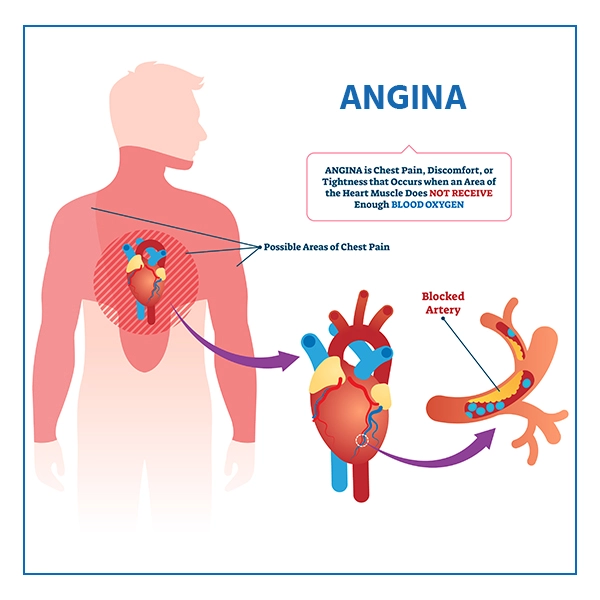
Angina is a form of chest pain caused by the decreased blood supply to the heart. A lack of blood flow suggests that the cardiovascular system is not getting enough oxygen. Physical exertion or emotional stress are common causes of this type of discomfort.
The most common symptoms of angina are severe pain and pressure. They might also describe a squeezing feeling in their chest. These senses may last for a few minutes before dissipating. While you climb stairs, exercise, or are stressed, your symptoms may worsen.
With regular exercise or other measures to manage stress, your symptoms may improve. Importantly, in some people, angina can manifest as tiredness, shortness of breath, abdominal discomfort, fatigue, or other symptoms in addition to the "typical" chest discomfort.
What are the Types of Angina?
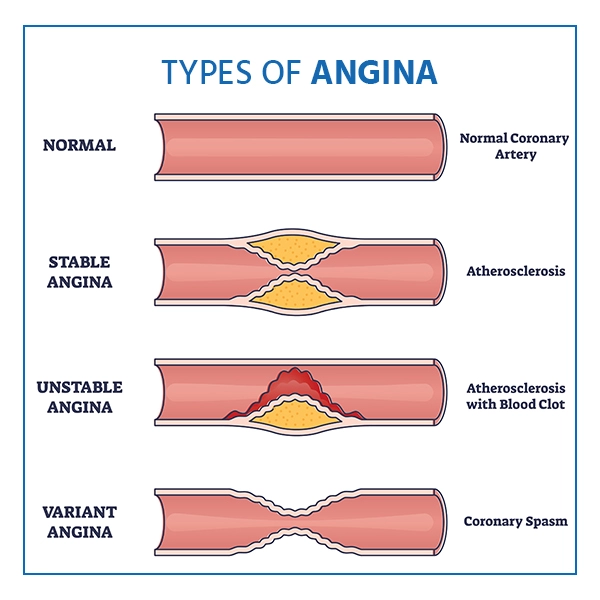
- Stable Angina: The most frequent type of angina is stable angina, often known as angina pectoris. Stable angina is a well-defined pattern of chest discomfort. The pattern is frequently traceable based on what you're doing while you feel the discomfort in your chest. Tracking stable angina symptoms can help you manage them more readily.
- Unstable Angina: Another type of angina is unstable angina. It happens unexpectedly and worsens with time. It has the potential to result in a heart attack. Although stable angina is less severe than unstable angina, it can still be painful and uncomfortable. Both types of angina are typical symptoms of an underlying heart issue, so consult your doctor as soon as you notice any symptoms.
- Microvascular angina: It can arise in the presence of coronary microvascular dysfunction (MVD). This has an impact on the tiniest coronary arteries, In addition to chest pain, an individual may feel:
- Weariness and a lack of energy :
- Sleeping issues
- Breathing difficulty
- Variant Angina: Variant angina is uncommon. Doctors frequently refer to it as Prinzmetal angina, and it can occur when the body is at rest, usually around midnight or early in the morning. It occurs when the coronary arteries contract. Cold exposure, stress, medications, smoking, or cocaine usage are all potential factors. It is a serious illness that can be treated medically.
Microvascular angina is more likely to be persistent than stable angina. It frequently lasts more than 10 minutes and, on occasion, more than 30 minutes.
What Are the Symptoms that Show up Along with Angina?
The symptom is chest pain, but it differs from person to person. One can experience:
- Weariness and a lack of energy
- Burning
- Discomfort
- Dizziness
- Fatigue
- A sense of wholeness in your chest
- A sense of tiredness or pressure
- Vomiting or upset stomach
- Breathing difficulty (dyspnea)
- Squeezing
- Sweating
- Pain in the abdomen
- Sweating excessively
- Stomach ache or gas (indigestion)
- Fatigue
- Vomiting and nausea
- Neck, jaw, shoulder, or back pain
You could misunderstand aching or blistering heartburn or gas. Pain behind your breastbone is likely, and it may spread to one's shoulders, arms, neck, throat, jaw, or back. Rest often helps with stable angina. Unstable angina may not, and it may worsen. It's a medical issue that needs immediate attention. Angina is more common in men over 45 and women over 55
What are the Causes of Angina?
Angina is usually caused by heart disease. Plaque, a fatty substance, accumulates in the arteries, obstructing blood supply to the heart muscle. As a result, your heart must work with much less oxygen. This causes discomfort. You may have blood clots in your heart's arteries, which can lead to heart attacks
The following are some less common causes of chest pain:
- A clog in a major artery leads to the respiratory system (pulmonary embolism)
- A heart that is enlarged or thickened (hypertrophic cardiomyopathy)
- A valve in the main chamber of your heart narrows (aortic stenosis)
- When the sac all over the heart is swollen (pericarditis)
- Tears in the wall of the aorta, the body's largest artery (aortic dissection)
During times of low oxygen demand, such as when resting, the heart muscle may be able to work with less blood circulation without provoking angina symptoms. Angina can occur whenever the demand for oxygen increases, such as when exercising.
When to See a Doctor for Angina?
Consult a cardiologist if you experience chest pain, pressure, or discomfort, especially during physical activity or emotional stress. Prompt medical evaluation is important to determine the cause of your symptoms and reduce the risk of a heart attack or other serious heart complications.
- New or unexplained chest pain: Seek medical attention if you develop chest discomfort that has not been evaluated before.
- Frequent or worsening angina: Angina episodes that become more frequent, severe, or occur with less activity require prompt assessment.
- Chest pain at rest: Chest pain that occurs while resting or lasts longer than a few minutes may indicate unstable angina and requires emergency medical care.
- Shortness of breath: Difficulty breathing with or without chest pain should be evaluated immediately.
- Pain spreading to other areas: Chest pain that radiates to the arm, shoulder, neck, jaw, or back may be a sign of a heart attack.
- Associated symptoms: Seek emergency care if chest pain is accompanied by sweating, nausea, dizziness, fainting, or extreme fatigue.
- No relief with prescribed medication: If chest pain does not improve after taking prescribed nitroglycerin or following your doctor's instructions, seek emergency medical attention immediately.
Find Cardiologists for Angina Treatment Near You
- Doctor for Angina in Hyderabad - Hitech City
- Doctor for Angina in Hyderabad - Financial District
- Doctor for Angina in Secunderabad
- Doctor for Angina in Bengaluru
- Doctor for Angina in Navi Mumbai
- Doctor for Angina in Pune
- Doctor for Angina in Vizag
- Doctor for Angina in Nashik
- Doctor for Angina in Chh.Sambhajinagar
- Doctor for Angina in Kurnool
Diagnosis of Angina
To diagnose angina, your doctor will perform a physical exam and ask you about your health history. You'll also be asked about every risk factor, such as a family history of heart disease.
The following tests are used to identify and confirm angina:
- ECG or EKG stands for electrocardiogram: This simple and painless test assesses the heart's electrical activity.
- X-ray of the chest: A chest X-ray reveals the health of the heart as well as lungs
- Blood tests are performed: These substances can be detected using a cardiovascular enzyme blood test.
- The stress test: A typical stress test consists of walking on a treadmill or trying to ride a stationary bike while the heart rate is monitored.
What are the Treatment Options for Angina?
Your treatment will be determined by the extent of the damage to your heart. Medicine and changes in lifestyle can often help people with mild angina, improve their blood flow and control the symptoms.
- Medicines: Your doctor may prescribe the following angina medications:
- Nitrates and calcium channel blockers relax and widen capillaries, allowing more blood to flow to the heart.
- Beta-blockers slow down your heart, enabling it to work less hard.
- Antiplatelet or blood thinner medications are used to prevent heart attacks and strokes.
- Statins are medications that are used to lower cholesterol and stabilize plaque.
- Therapies: To increase the blood flow to the heart, a non-drug option known as enhanced external counterpulsation (EECP) may be suggested at times. Blood pressure cuffs are wrapped around the calves, thighs, and pelvis during EECP. Multiple treatment sessions are required for EECP. People who have frequent, uncontrolled angina may benefit from EECP (refractory angina)
- Blood tests are performed: These substances can be detected using a cardiovascular enzyme blood test.
- Cardiovascular procedures: If medications are ineffective, you may require a medical procedure or surgery to open blocked arteries. It could be:
- Angioplasty combined with stenting: A small balloon is implanted into the narrowed artery during angioplasty, also known as a percutaneous coronary intervention (PCI). After inflating the balloon to widen the artery, a small wire mesh coil (stent) is typically integrated to keep the artery open.
- Coronary artery bypass procedure (coronary artery bypass surgery): A vein or artery from another part of the body is being used to bypass a blocked artery heart artery during coronary artery bypass surgery.
Your health is everything - prioritize your well-being today.
 Consult Angina Doctors Today
What are the Risk factors of Angina?
The following factors may raise your risk of angina:
- Getting older: Angina is most common in adults over the age of 60.
- Heart disease runs in the family Inform your doctor if your mother, father, or any siblings have or have had cardiovascular disease or a heart attack.
- Tobacco consumption: Smoking, chewing tobacco, and long-term secondhand smoke exposure can harm the lining of the arteries, allowing cholesterol deposits to accumulate and block blood flow.
- Diabetes: Diabetes raises the risk of heart attack, which causes angina and heart attacks by hastening atherosclerosis and elevating cholesterol levels.
- Blood pressure is high: Hypertension damages arteries over time by hastening artery hardening.
- High levels of cholesterol or triglycerides: Too much bad cholesterol, known as low-density lipoprotein (LDL), in the bloodstream can cause artery narrowing. High LDL cholesterol raises the risk of angina and heart disease. A high triglyceride level in the blood is also harmful.
- Other medical conditions: Angina is more likely in people who have chronic kidney problems, peripheral arterial disease, metabolic syndrome, or a history of stroke.
- There isn't enough exercise: Inactivity is linked to high cholesterol, hypertension, type 2 diabetes, and obesity. Consult your doctor about the type and number of exercises that are best for you.
- Obesity: Obesity increases the risk of heart disease, which might lead to angina. Obesity causes the heart to beat to supply blood throughout the body.
Prevention of Angina
Prevention of Angina focuses on reducing the risk of coronary artery disease and improving heart health. Adopting a heart-healthy lifestyle, managing underlying medical conditions, and following your healthcare provider's recommendations can help prevent angina episodes and lower the risk of heart attacks.
- Follow a heart-healthy diet: Eat plenty of fruits, vegetables, whole grains, lean proteins, and healthy fats while limiting salt, saturated fats, and processed foods.
- Exercise regularly: Engage in moderate physical activity, as recommended by your healthcare provider, to improve cardiovascular health.
- Maintain a healthy weight: Achieving and maintaining a healthy body weight reduces strain on the heart.
- Quit smoking: Avoid tobacco products and exposure to secondhand smoke to improve blood vessel function.
- Control blood pressure, cholesterol, and diabetes: Take prescribed medications and monitor these conditions regularly.
- Manage stress: Practice relaxation techniques such as meditation, yoga, or deep breathing to reduce emotional stress.
- Limit alcohol intake: Drink alcohol in moderation or avoid it if advised by your healthcare provider.
- Take medications as prescribed: Follow your treatment plan to help prevent angina attacks and reduce the risk of complications.
- Attend regular medical check-ups: Routine follow-up with your healthcare provider helps monitor heart health and adjust treatment when necessary.
Frequently Asked Questions
1. How is angina classified?
Angina is typically classified into two main types: stable angina and unstable angina. Stable angina occurs predictably during physical exertion or stress and usually subsides with rest or medication. Unstable angina is more severe and can occur at rest, often lasting longer and being less predictable. It may signal an impending heart attack.
2. Can angina lead to a heart attack?
Certainly, unstable angina can serve as an early warning sign of an impending heart attack (myocardial infarction). If you encounter intense or prolonged chest pain, it is imperative to promptly seek medical assistance, as this could potentially signify the onset of a heart attack.
3. Can women experience angina?
Yes, both men and women can experience angina. However, women may experience somewhat distinct symptoms, including nausea, shortness of breath, and discomfort in the back or jaw. These differences in symptoms could potentially result in misdiagnosis or a delay in receiving appropriate treatment.
4. Is angina more common in certain age groups or populations?
Angina is more common in older adults, particularly those with risk factors such as high blood pressure, diabetes, smoking, and a family history of heart disease. However, it can affect people of all ages.
5. What is the life expectancy with angina?
Life expectancy with angina varies depending on severity, overall health, and treatment. Proper management can help improve quality of life and reduce complications.
6. What are the angina symptoms in women?
In women, angina symptoms may include chest pain, fatigue, shortness of breath, nausea, and dizziness, which can be less noticeable than in men.


