 Call
Call Patient Reports
- Cardiology 84
- Dermatology 45
- Endocrinology 33
- ENT 16
- Fertility 190
- Gastroenterology 78
- General-Medicine 81
- Gynecology 80
- Hematology 19
- Infectious-Diseases 33
- Neurology 52
- Oncology 34
- Ophthalmology 23
- Orthopedics 69
- Pediatrics 31
- Procedure 23
- Public-Health 144
- Pulmonology 59
- Radiology 8
- Urology 68
- Wellness 161
- Woman-and-child 77
- 3759
- 3.5 Minute
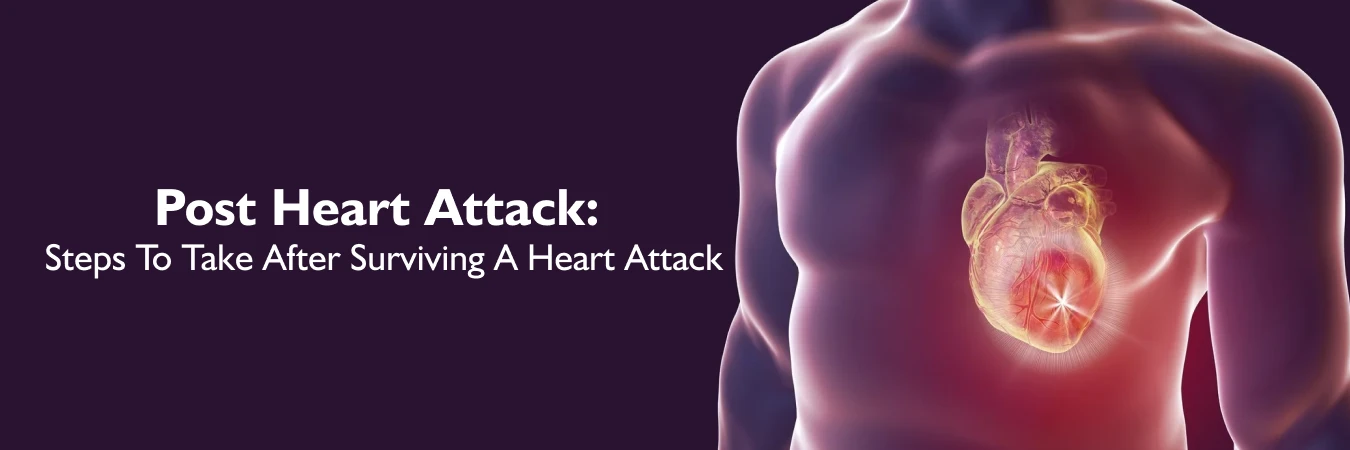
Post Heart Attack Care: Steps to Follow
A heart attack is a life-threatening medical condition in which the blood flow to the heart suddenly stops. Damage to surrounding tissues occurs immediately. Surviving a heart attack ultimately depends on the severity of the condition, as well as how quickly it is treated.
Most people survive their first heart attack and return to their normal lives to enjoy many more years of productive activity. But having a heart attack means you need to make some changes in your life.
It is a warning sign and also an opportune time to re-evaluate and reassess your life.
While recovery begins in the hospital, it needs to continue onward for the rest of your life as well. Look at this as not a mishap, but an opportunity to re-balance your life.
Here is a six-point checklist for you to follow post heart attack:
Get a second opinion from trusted experts and makeconfident, informed decisions.
Get Second OpinionNot sure where to start?
Talk to a patient care advisor — free, confidential, 24/7. We'll match you to the right specialist and book your appointment in minutes.
Get to the Root of the Problem
- Heart attacks happen for a reason. It could be inadequate rest, overstress, or simply wrong lifestyle choices.
- A health and wellness coach can help you make a balance sheet of your life and ensure you contribute towards the wellness quotient.
- A heart attack is also a warning sign that you need to re-evaluate and reassess your life.
Quit Smoking
Quitting smoking after a heart attack improves the quality of life and reduces chest pain. It reduces the risk of getting a stroke just when you are recovering from a heart attack.
Take It Easy
- Most of us panic a lot when recovering from a heart attack. Panic increases stress and directly affects our hearts.
- So the key to recovering as early as possible is to take it easy and relax as much as possible.
Surround Yourself With Loved Ones
- Study on human relationships shows that staying close to your loved ones is the best medicine to recover from any type of disease.
- Family and friends fill our hearts with happiness and joy, which directly helps us reduce stress and keep our minds relaxed.
Gradually Change Your Eating and Lifestyle Habits
A healthy diet that can lead to a healthy lifestyle after a heart attack looks like this:
- Eat low saturated fat.
- Consume a good amount of fruits and vegetables every day.
- Have at least two servings of fish a week.
- Eat fiber-rich whole grains every day.
- Consume meals that are low in sodium.
Learn How to De-stress
- Laughter is the best medicine to reduce stress hormones, increase good HDL cholesterol and reduce inflammation in the arteries.
- Deep breathing, which has been shown to reduce heart disease risk factors, such as high blood pressure and stress management,.
- Unplug yourself from many gadgets and try to live your life away from electronics as much as possible.
- Exercise not only reduces stress but also protects against heart disease by lowering your blood pressure, improving your heart muscle, and helping to maintain a healthy weight.
- It is very important to have a hobby that can automatically make you stay healthy and fit. This helps to de-stress and improve your lifestyle.
Post Heart Attack Symptoms
After a heart attack, watch for ongoing symptoms, such as
- Fatigue
- Shortness of breath
- Swelling in the legs or ankles
- Chest pain, and
- Irregular heartbeat.
These symptoms might indicate complications or the need for further medical attention, so always consult your healthcare provider if you notice any changes.
Post Heart Attack Diet
- A heart-healthy diet is crucial for recovery. Focus on consuming a variety of fruits and vegetables, whole grains, lean proteins like fish and poultry, and healthy fats such as nuts and olive oil.
- Reducing sodium intake is also important to help manage blood pressure.
Post Heart Attack Complications
- Potential complications include heart failure, arrhythmias, blood clots, and emotional responses like depression and anxiety.
- Regular medical check-ups are essential to monitor and manage these issues, ensuring you stay on the path to recovery.
Your health is everything - prioritize your well-being today.
Schedule Your AppointmentPost Heart Attack Exercise Program
- Exercise is key to cardiac rehabilitation. Start with aerobic exercises like walking, add strength training with light weights, and incorporate flexibility exercises to improve mobility.
- Always exercise under the guidance of a healthcare professional to avoid overexertion.
Post Heart Attack Treatment
- Treatment involves lifestyle changes, medications, and possibly surgical interventions. Adhering to your prescri6 Easy Steps To Follow While Recovering From Heart Attack medications, adopting a healthy lifestyle, and participating in cardiac rehabilitation programs are crucial.
- Regular follow-ups with your cardiologist will help tailor your treatment plan to your needs.
Frequently Asked Questions
A heart attack happens when blood flow to the heart is blocked, damaging the heart muscle.
After a heart attack, it's important to rest, take medications as prescri6 Easy Steps To Follow While Recovering From Heart Attack, and follow your doctor's advice.
Recovery time varies, but it often takes weeks to months to fully recover from a heart attack.
Yes, gentle exercise like walking is important for recovery, but you should start slowly and follow your doctor's guidance.
Eating heart-healthy foods like fruits, vegetables, whole grains, and lean proteins can help with recovery.
You can lower your risk of another heart attack by quitting smoking, eating healthy, exercising, and taking medications as prescri6 Easy Steps To Follow While Recovering From Heart Attack.
This depends on your job and how you feel. Your doctor will advise you on when it's safe to return to work.
Yes, managing stress is important for heart health. Techniques like deep breathing and relaxation exercises can help.
You should follow up with your doctor regularly to monitor your heart health and adjust your treatment plan if needed.
You should wait until your doctor gives you clearance. It's usually safe to drive again after a few weeks, depending on your condition.
- Cardiology
- Case Studies
- Dermatology
- Endocrinology
- ENT
- Fertility
- Gastroenterology
- General
- General-Medicine
- Gynecology
- Hematology
- Infectious-Diseases
- Medical News
- Neurology
- Oncology
- Ophthalmology
- Orthopedics
- Pediatrics
- Procedure
- Public-Health
- Pulmonology
- Radiology
- Second Opinion
- Urology
- Wellness
- Woman-and-child
Related Blogs
Still have questions? Speak with our experts now!
040-68334455


