 Call
Call Patient Reports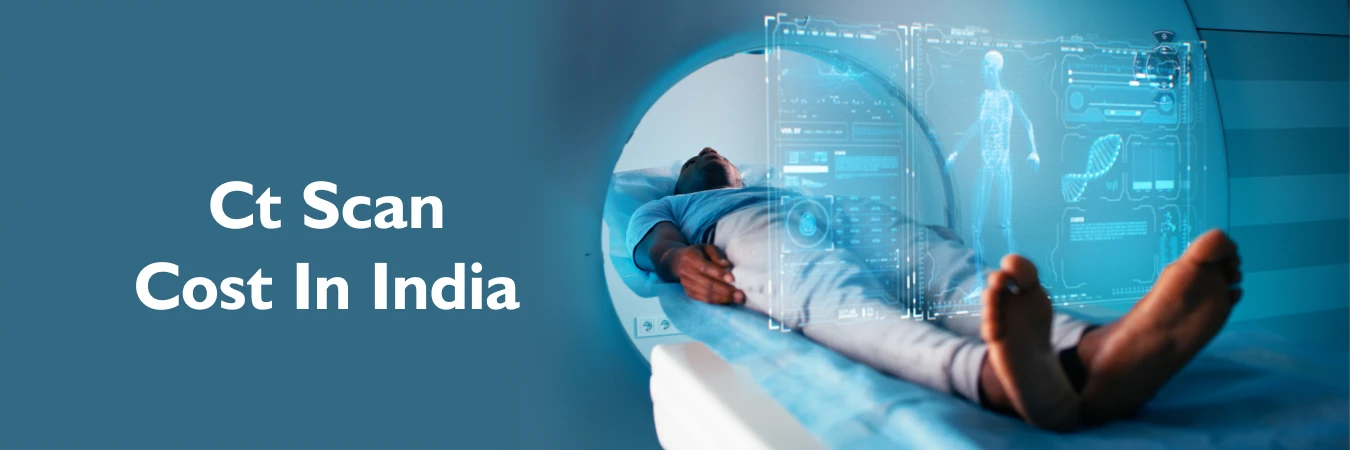
- 3745
- 3.5 Minute
Written by Medicover Team and Medically Reviewed by Dr R Suresh Kumar, Radiologist
CT Scan Cost in India: A Complete Guide
The cost of a CT scan in India depends on various factors, including the location, the body part being scanned, the contrasts being used and the number of slice sections.
CT scan stands for Computerized Tomography, also known as CAT scan, which stands for Computerized Axial Tomography. It is a diagnostic investigation in radiology that uses X-rays and a computer to create cross-sectional pictures of the body.
A CT scan is a quick and painless procedure that provides more detailed pictures than a regular X-Ray. It can diagnose various conditions related to different parts of the body, including bones, organs, blood vessels and soft tissues. Usually, a CT scan is prescribed to visualize.
How Does a CT Scan Work?
- A CT scan machine is a large, tunnel-like structure with a table that slowly moves through it. To start the scan, the person is asked to lie on the table.
- As the table slowly moves into the CT machine, a scanner inside the machine rotates around the body and takes a series of X-rays from different angles.
- When one rotation of the scanner is completed, it means one full slice is completed and the image gets stored in the computer.
- The rotation of the X-ray scanner then repeats to produce another image slice.
- Thus, the process is continued until the desired number of image slices are collected, up to 256 slices.
- These collected image slices can be either displayed individually or stacked together in order to generate a 3-D image of the patient by the computer that stores the images during the scan.
- The individual image slices or the 3-D image of the body, makes the doctor's job easier to spot the exact location of the problem.
Get a second opinion from trusted experts and makeconfident, informed decisions.
Get Second OpinionNot sure where to start?
Talk to a patient care advisor — free, confidential, 24/7. We'll match you to the right specialist and book your appointment in minutes.
CT Scan Procedure at Medicover Hospital, India
A CT scan is a day-care procedure that doesn't require hospitalization. Here's what to expect:
- Preparation: Patients are instructed to fast and consume only liquids before the scan. They wear a hospital gown and remove all jewelry and metal fastenings.
- During the Scan:
- Patients lie on a motorized table that moves into the CT machine.
- They may be repositioned as needed (face up, down, or sideways).
- Communication with the radiologist is via intercom for instructions.
- Remaining still is crucial to avoid blurring the images.
- Completion: The scan continues until the desired number of image slices, prescribed by the doctor, are obtained.
Why is a CT Scan Prescribed?
Doctors prescribe a CT scan to:
- Diagnose Bone and Joint Disorders: Detect complex fractures, tumors, and other bone abnormalities.
- Guide Treatments: Aid in procedures such as biopsies, radiation therapy, or surgery.
- Evaluate Internal Injuries: Assess trauma-related internal injuries or bleeding.
- Locate Conditions: Pinpoint the location of infections, tumors, or blood clots, including cancer.
- Monitor Treatment: Track the effectiveness of treatments for conditions like cancer and heart disease.
Approximate CT Scan Price in India
| Scan Type | Cost Details |
|---|---|
| CT Brain | Rs. 4004/- |
| CT Chest | Rs. 5720/- |
| CT Abdomen | Rs. 7150/- |
| CT Spine | Rs. 9295/- |
| CT Angiography | Rs. 15005/- |
The CT scan rate in India can vary based on your location, the hospital and the type of scan you need.
Indications for CT Scanning: What to Know
CT (Computed Tomography) scans are essential diagnostic tools used to get detailed images of the body's internal structures. Here are common reasons for ordering a CT scan:
- Head and Brain Injuries
- Cancer Detection
- Abdominal Pain
- Chest Pain or Breathing Problems
- Spinal Problems
- Infections or Abscesses
- Vascular Issues
- Bone Fractures and Joint Issues
CT scans are usually recommended when a doctor requires detailed, cross-sectional images of the body to make an accurate diagnosis or guide treatment decisions.
Your health is everything - prioritize your well-being today.
Schedule Your AppointmentWhy a CT Scan is Convenient, Safe and Affordable?
A CT scan is considered convenient, safe and affordable for several reasons. It is convenient because it provides quick, detailed images, often within minutes, making it ideal for emergency situations like trauma or severe pain. The process is simple, requiring minimal preparation, which helps doctors diagnose and treat conditions faster. In terms of safety, modern CT technology has reduced radiation exposure compared to older machines.
While there is some radiation involved, it's minimal and doctors only recommend a CT scan when the benefits outweigh the risks. Finally, affordability makes CT scans a cost-effective option compared to other imaging tests like MRIs, making it accessible to more patients. This combination of speed, safety and affordability makes CT scans a reliable tool for diagnosing a variety of conditions.
Frequently Asked Questions
Factors affecting the cost include the type of CT scan (e.g., brain, chest, abdomen), the use of contrast dye, the reputation of the hospital or diagnostic centre, and the city or region where the scan is performed.
Additional costs may include consultation fees with a specialist, the cost of contrast dye if used, and any follow-up tests or procedures recommended based on the CT scan results.
You will lie on a table that travels through a circular scanner during a CT scan. The procedure is painless and typically takes 10 to 30 minutes. If a contrast dye is used, it may be injected into a vein or taken orally.
CT scans use low radiation and are usually safe, but repeated scans should be limited. Contrast dye may cause allergies or affect the kidneys in some people.
For most CT scans, you can eat and drink as usual. However, if contrast dye is used, you may be asked to fast for a few hours before the procedure. Follow your doctor's specific instructions.
You can save money by comparing prices at different hospitals, checking government or diagnostic centers, and using health insurance if available.
CT scans are usually avoided during pregnancy unless absolutely necessary, as radiation may pose risks to the baby. Always consult your doctor first.
- Cardiology
- Case Studies
- Dermatology
- Endocrinology
- ENT
- Fertility
- Gastroenterology
- General
- General-Medicine
- Gynecology
- Hematology
- Infectious-Diseases
- Medical News
- Neurology
- Oncology
- Ophthalmology
- Orthopedics
- Pediatrics
- Procedure
- Public-Health
- Pulmonology
- Radiology
- Second Opinion
- Urology
- Wellness
- Woman-and-child
Related Blogs
Still have questions? Speak with our experts now!
040-68334455


